
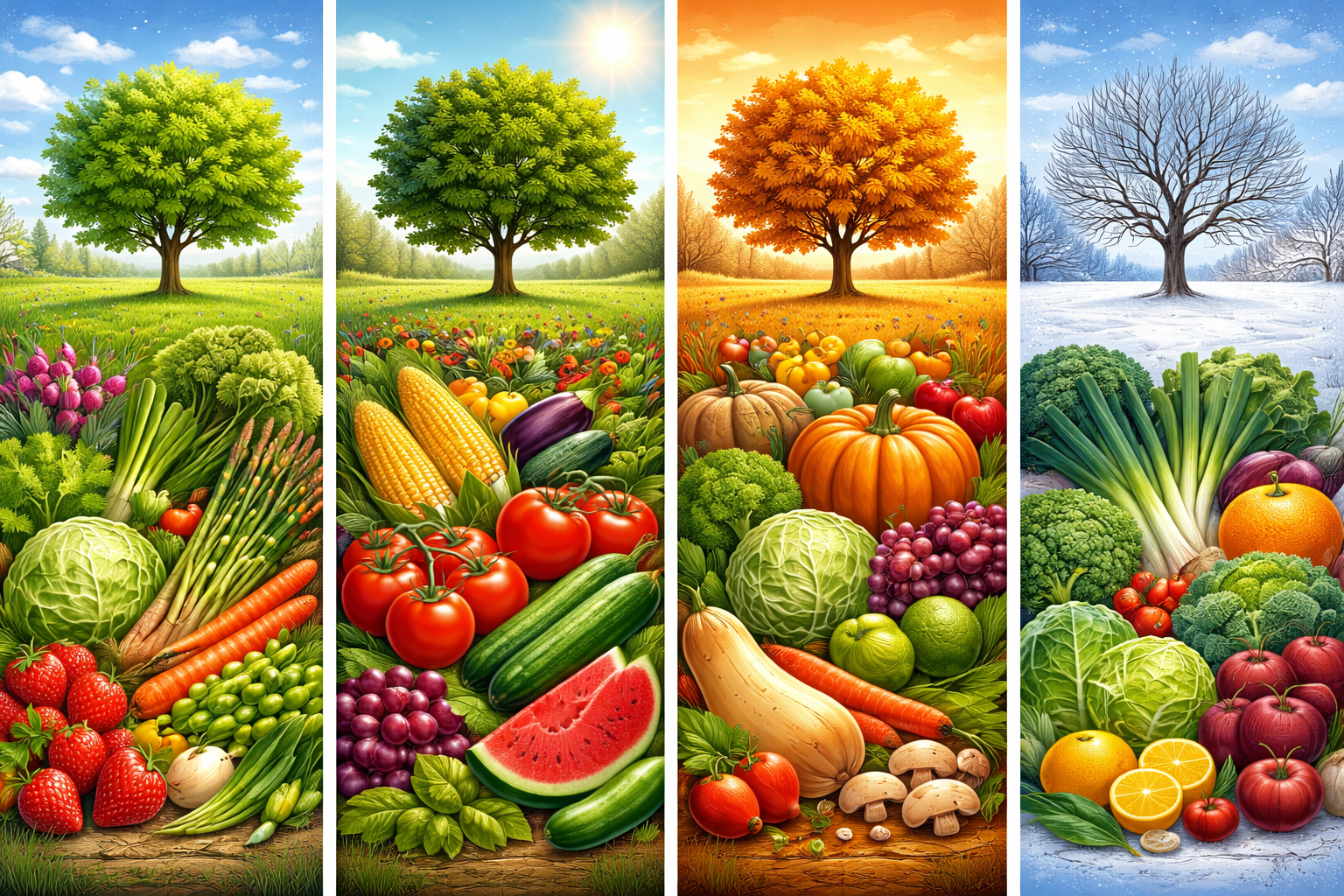
Seasonality as a Cooking System in Everyday Cooking
Seasonality as a cooking system is a way of understanding food through time rather than trends. Instead of starting with a recipe, this approach begins by looking at what ingredients are naturally available right now. When seasonality as a cooking system guides your choices, cooking becomes simpler, flavours improve, and meals feel more in tune with the moment.
For most of history, people cooked this way without naming it. Food followed the calendar, not the supermarket shelf. Returning to this mindset helps modern cooks reconnect with rhythm, freshness, and intention in the kitchen.
How a Seasonal Cooking Approach Improves Flavour
A seasonal cooking approach works because ingredients taste better when they are grown and harvested at the right time. Tomatoes are sweeter in summer, greens are tender in spring, and root vegetables become richer in colder months. These natural changes are the foundation of good flavour.
When ingredients are at their peak, they need less help. Fewer spices, lighter seasoning, and simpler techniques are enough. This is why seasonality as a cooking system reduces effort while improving results. The food does more of the work for you.
Why Seasonal Cooking Simplifies Decisions
One overlooked benefit of seasonal cooking is how it limits choices in a helpful way. Instead of facing endless options, you work with what the season offers. This makes planning meals easier and cooking less stressful.
A seasonal cooking approach removes the pressure to force certain foods year-round. You stop asking what you want to cook and start noticing what makes sense to cook now. That shift alone can transform your relationship with the kitchen.
Cooking Techniques Change With the Seasons
Seasonality as a cooking system does not only affect ingredients—it also shapes technique. In colder months, slow cooking, roasting, and braising feel natural and comforting. In warmer months, quick sautés, grilling, and fresh preparations take over.
The same ingredient can behave very differently depending on season and method. Seasonal cooking encourages flexibility, helping cooks adjust heat, timing, and texture without rigid rules.
A Seasonal Cooking Approach Creates Natural Balance
When food follows the seasons, balance often appears without planning. Lighter meals show up in warmer weather, while heartier dishes feel right when temperatures drop. This alignment supports appetite, energy, and satisfaction.
Seasonality as a cooking system works with the body instead of against it. Meals feel complete without excess because ingredients match both climate and craving.
Sustainability as a Side Effect
Seasonal cooking often leads to more responsible choices without trying too hard. Ingredients usually travel less, last longer, and create less waste. While sustainability may not be the goal, it becomes a natural outcome of cooking in sync with the seasons.
Fresh food is used more fully, and meals feel intentional rather than forced.
Learning to Cook With the Seasons
Adopting seasonality as a cooking system does not require perfection. It begins with awareness. Notice what appears at markets, what tastes best at certain times of year, and how your cooking naturally shifts.
Over time, this approach builds confidence. Cooking stops feeling mechanical and starts feeling responsive. Seasonality as a cooking system turns everyday meals into something thoughtful, grounded, and deeply satisfying.


