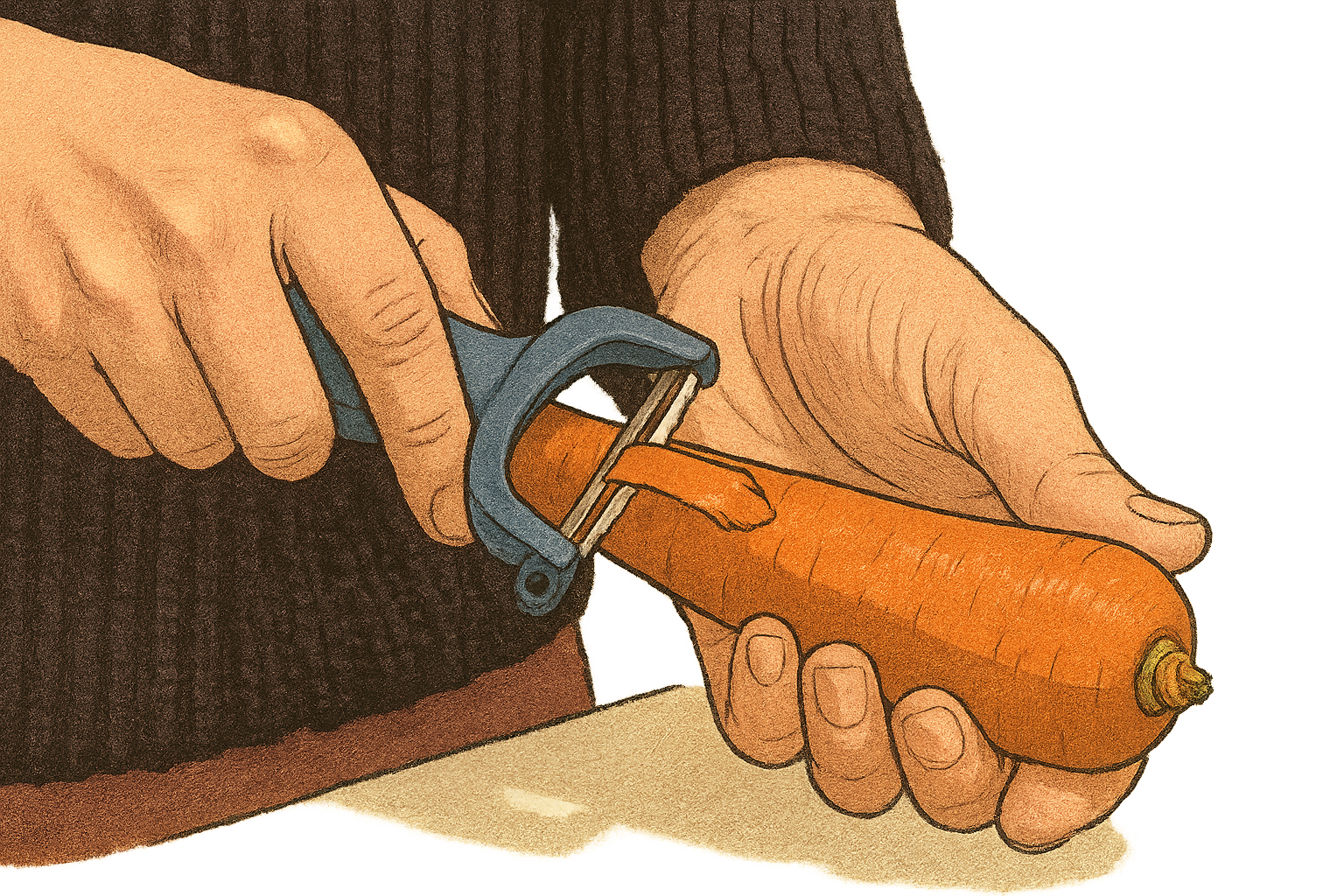
Peeling might seem like one of the most basic tasks in the kitchen, but mastering your peeling skill can dramatically improve the quality of your cooking. Whether you’re preparing potatoes for mash, carrots for a stir-fry, or butternut squash for a roast, good peeling technique helps you work faster, waste less, and stay safer.
Why Peeling Matters
Peeling isn’t just about making vegetables look neat. Proper peeling removes dirt, fibrous skins, and any tough outer layers that can affect the texture and flavour of your dish. A well-peeled carrot cooks evenly. A neatly peeled potato browns better. And peeling certain ingredients—like ginger or squash—helps release their true flavour and aroma. Plus, refining your skill in peeling always makes a visible difference in texture and appearance.
Wash First, Always
Before you even pick up your peeler, wash your vegetables thoroughly. This removes dirt, grit, and contaminants. When you peel without washing, you risk dragging dirt from the skin into the flesh. A quick scrub under cold running water is all it takes. As a tip, excellent results begin with clean produce and careful attention to your skill in peeling.
Use the Right Angle
A good peeler should glide, not dig. Hold the peeler at a slight inward angle so it removes only a thin layer of skin. This avoids unnecessary waste and keeps the vegetable’s shape. Focusing on proper angle will not only help your peeling but also develop your overall peeling skill over time. Thick, heavy strokes often take off more than needed, reducing yield and creating uneven surfaces.
Long, Continuous Strokes
For round vegetables like potatoes, carrots, or cucumbers, peel from top to bottom in one long, smooth strip. This technique is faster and gives a cleaner finish. Short strokes tend to leave ridges or patchy spots that make further cutting uneven. In fact, improving this aspect of your peeling skill makes prep work faster and more precise.
Follow the Vegetable’s Shape
Not all vegetables peel the same way. Curved or irregular ingredients—such as butternut squash, ginger, or knobbly roots—require a little adaptation. Once cut open, a spoon works beautifully to scrape away the skin or fibres without removing excess flesh. Ultimately, adapting to each ingredient polishes your overall skill at peeling different shapes.
Mastering peeling isn’t complex, but small improvements in technique make your prep quicker, your dishes neater, and your cooking more enjoyable. With practice, your peeling skill will steadily grow and you’ll notice the results in every meal.
Types of Peelers and When to Use Them
Not all peelers are made the same, and choosing the right one can make a surprising difference in speed, comfort and the final look of your ingredients. Most home cooks only own one peeler, but professionals often keep several because each style excels at a slightly different task. Considering the tool that best suits your peeling skill can also help you become more efficient in the kitchen.
1. Y-Peeler (Swiss Peeler)
Shaped like the letter “Y,” this peeler sits comfortably in the hand and allows quick, efficient strokes. Its horizontal blade makes it ideal for long vegetables like carrots, courgettes, and cucumbers. Many chefs prefer Y-peelers because they minimise wrist movement and allow better control, especially when peeling large quantities. They’re also great for shaving thin ribbons of vegetables for salads. Selecting the right peeler can enhance your peeling skill, especially for large jobs.
2. Straight Peeler (Lancashire Peeler)
This classic peeler has a vertical blade aligned with the handle—much like a knife. It’s excellent for precision work and offers a familiar, intuitive grip for beginners. Straight peelers are effective for potatoes, apples, round vegetables, or anything that needs a simple top-to-bottom peel. They’re also handy for removing blemishes or eyes from potatoes. Mastering the straight style will help you sharpen your peeling skill for a range of produce.
3. Serrated Peeler
Serrated peelers have small teeth on the blade, allowing them to grip delicate or slippery skins without tearing the flesh. They shine with tomatoes, peaches, kiwis, and soft fruit—ingredients that would normally require blanching before peeling. If you handle a lot of ripe produce, a serrated peeler is a game-changer. Additionally, practicing with a serrated type adds versatility to your peeling skill.
4. Julienne Peeler
Equipped with small, sharp teeth arranged in lines, the julienne peeler cuts ingredients into thin matchstick strips. It’s perfect for stir-fries, garnishes, salads, and noodle bowls. Use it on carrots, courgettes, beetroot, or green papaya to create fine, uniform strands instantly. Mastery of this tool adds another element to your peeling skill and expands your prep options.
Each type of peeler brings something unique to the kitchen, and using the right one makes peeling smoother, safer, and more enjoyable. In summary, building a strong peeling skill with different tools leads to better and more efficient kitchen experiences.