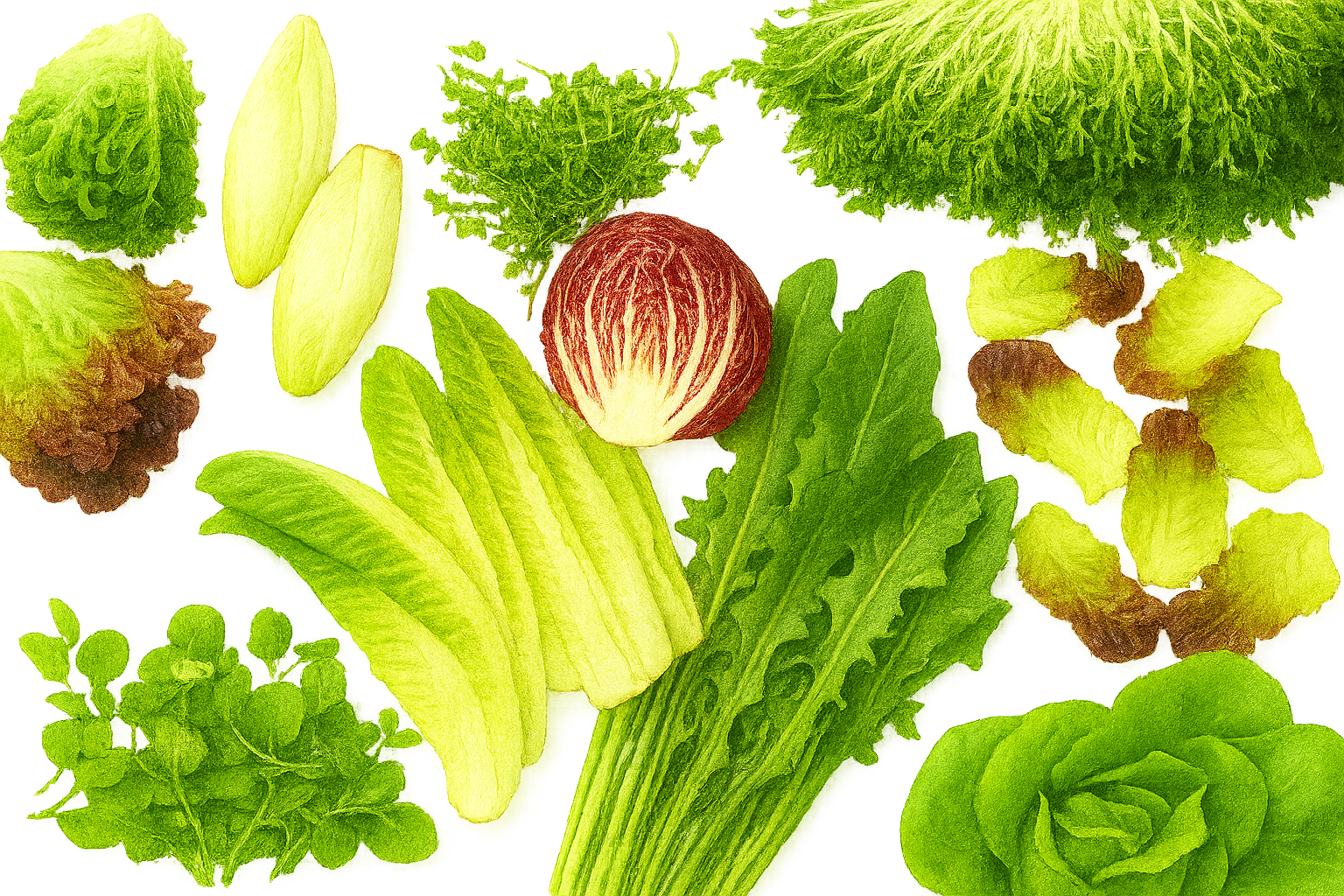
A good salad starts long before the dressing hits the bowl. In fact, the real secret to a crisp, fresh, flavour-packed salad is in the preparation of the greens themselves. Whether you’re using delicate lamb’s lettuce or crunchy iceberg, the steps are the same: wash well, dry completely, and cut or tear into bite-sized pieces. Simple, but crucial.
Let’s walk through the process and explore how to prepare the most common salad greens used around the world.
Why Proper Prep Matters
Greens hold onto dust, sand, soil, and at times even tiny insects. Even the bags labelled “pre-washed” benefit from a quick rinse because washing removes grit and refreshes the leaves. More importantly, drying is the step most people skip—yet this is what separates a crisp, restaurant-quality salad from a soggy, diluted one. Dressings cling beautifully to dry leaves; wet leaves repel flavour.
Types of Salad Greens and How to Prepare Them
Different greens behave differently—some are sturdy and crunchy, others soft and delicate. Here’s how to handle the most common varieties.
1. Lettuce (Butterhead/Boston/Bibb)
Soft, tender and mildly sweet, butterhead lettuces bruise easily.
- Separate the leaves gently.
- Wash in cold water to remove soil collected at the base.
- Dry carefully—spin briefly or pat with a towel.
- Tear rather than cut to avoid bruising the edges.
2. Romaine (Cos Lettuce)
Crisp, crunchy and one of the cleanest-feeling lettuces.
- Split the head lengthwise.
- Rinse between the long ribs, where grit likes to hide.
- Romaine is sturdy—spinning is ideal.
- Chop into pieces for Caesar salads or keep whole leaves for wedges.
3. Iceberg Lettuce
Known for its crunch and water content.
- Remove the core by hitting it against the counter.
- Pull apart the layers and wash thoroughly.
- Iceberg holds water—spin well.
- Cut into wedges, ribbons, or chunky pieces.
4. Lamb’s Lettuce (Mâche)
A delicate green that traps dirt in its rosette shape.
- Keep stems intact, handling gently.
- Soak in cold water for 5–10 minutes to release sand.
- Spin briefly—you don’t want to bruise it.
5. Watercress
Peppery and leafy with fragile stems.
- Rinse well under cold running water.
- Use paper towels or a gentle spin to dry.
- Trim off any very thick stems.
6. Rocket (Arugula)
Peppery leaves commonly used in Italian salads.
- Wash quickly—rocket wilts quickly when soaked.
- Spin immediately.
- Remove especially long stems if desired.
7. Radicchio
A bitter, crunchy leaf that brings colour to salads.
- Peel outer leaves and rinse.
- Cut into thin shreds or wedges.
- Spin gently—it bruises less than softer lettuces.
8. Dandelion Greens
Sharp, slightly bitter leaves.
- Soak for the full 10 minutes to remove grit.
- Dry thoroughly.
- Best chopped smaller due to their assertive flavour.
9. Endive (Belgian Endive, Frisée, Escarole)
A family of crisp, slightly bitter greens.
- Separate leaves and rinse carefully.
- Endives don’t absorb much water, so drying is quick.
- Slice crosswise for mixed salads.
Washing the Greens: The Essential Step
No matter the type, all greens should be washed—even bagged ones labelled “pre-washed”.
- Separate the leaves.
Trim off any rusty edges or damaged parts. - Soak in cold water.
Fill a salad spinner or large bowl with cold water. Add the greens and gently swish.
Soaking for 5–10 minutes lets sand fall to the bottom. - Lift, don’t pour.
Lift the greens out of the water so the dirt stays behind.
Rinse quickly if needed.
Drying the Greens: The True Secret to a Great Salad
Dressings cannot cling to wet leaves—they slide right off. This is why drying is the most important step.
Using a Salad Spinner (Recommended)
- Add washed greens to the spinner basket.
- Spin until dry—multiple batches may be needed.
Using Towels
- Spread leaves in a single layer on a clean kitchen towel.
- Pat gently or roll up the towel to absorb moisture.
Aim for leaves that feel cool and dry—not damp.
Final Preparation
Tear or Cut into Bite-Sized Pieces
Tearing is gentler and ideal for soft lettuces. Crunchier greens like romaine or radicchio can be cut.
Use a Large Mixing Bowl
A much bigger bowl than you think you need prevents crushing the leaves as you toss.
Dress Just Before Serving
Add vegetables, cheese, nuts or croutons.
Then drizzle dressing lightly and toss with your hands or two large forks.
Season
Finish with salt and pepper—it makes a world of difference.
Preparing salad greens properly is easy once you know the steps. Wash well, dry completely, and treat each type of green according to its structure. With this foundation, even the simplest salad will taste fresher, brighter, and more satisfying.