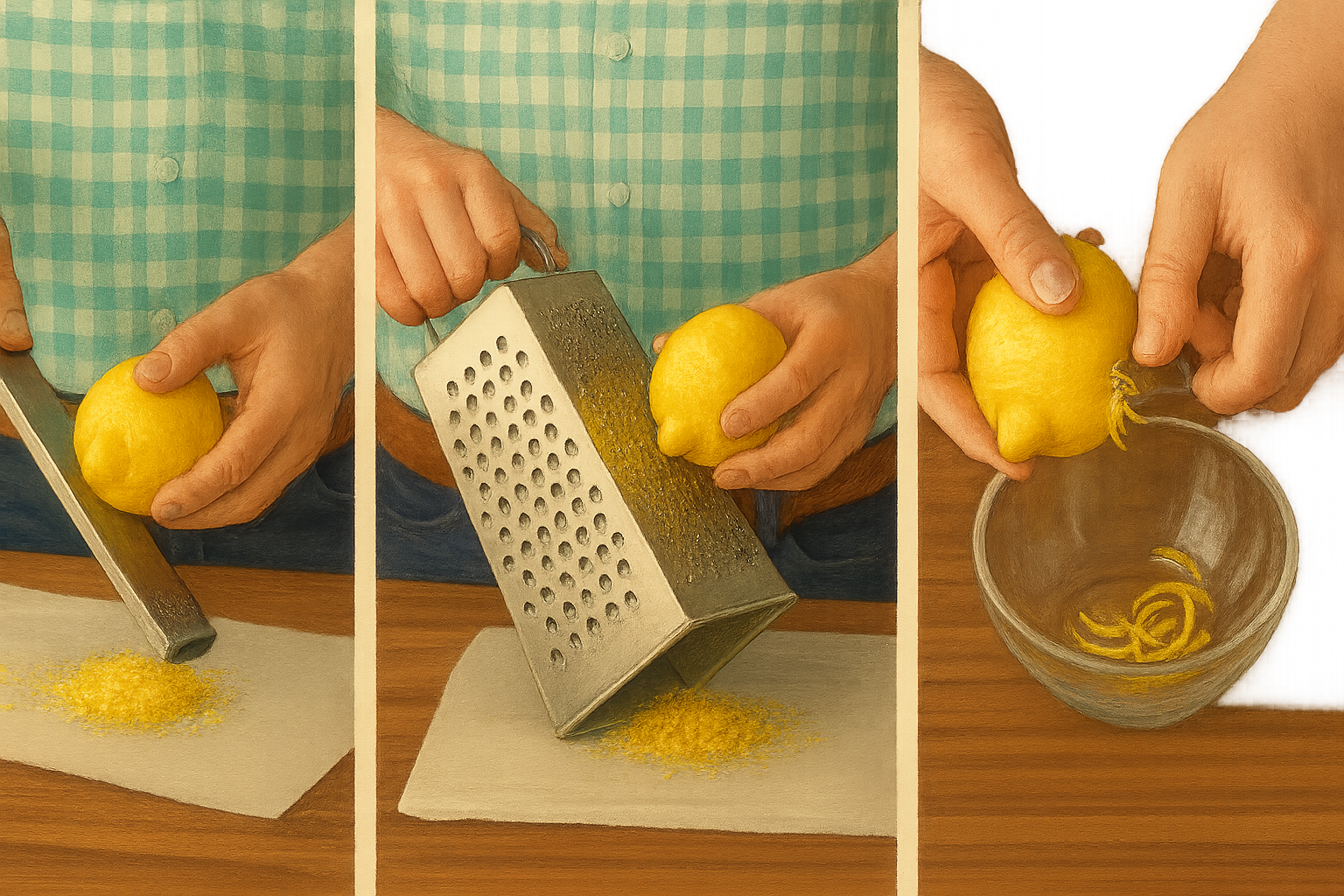
Citrus zest is one of the simplest ways to add huge flavour to food, yet many home cooks don’t realise how powerful it is. Zest is simply the outer coloured skin of citrus fruits—lemon, lime, orange, grapefruit, yuzu—scraped into tiny shavings. This colourful layer is packed with essential oils, which hold far more aroma and flavour than the juice itself. That’s why even a teaspoon of zest can make a dish suddenly taste brighter, fresher, and more complete.
Citrus Zests Used Around the World
Different cuisines rely on different citrus peels to bring out signature flavours:
- Lemon zest: Common in Italian pasta (like lemon linguine), French desserts, British cakes, roasted vegetables, and seafood dishes.
- Lime zest: Used heavily in Thai salads, Vietnamese dipping sauces, Mexican tacos, ceviches, and Caribbean marinades.
- Orange zest: Found in French pastries (madeleines, crêpes), North African tagines, Chinese orange chicken, and Italian biscotti.
- Grapefruit zest: Used in cocktails, salads, or fancy restaurant desserts for a bittersweet lift.
- Yuzu zest: A star of Japanese cooking—added to ponzu, ramen, miso dressings, and yuzu kosho (a spicy citrus paste).
- Bergamot zest: Famous in Earl Grey tea and certain Italian pastries from Calabria.
Each zest behaves the same way—it perfumes the dish—yet each one brings a different personality, from lime’s tropical sharpness to orange’s warm sweetness.
How to Zest a Lemon (4 Easy Ways)
Whether or not you own special tools, you can extract that bright citrus flavour using simple methods. The goal is always the same: remove only the colourful skin, never the white pith underneath (which tastes bitter).
1. Using a Citrus Zester
A citrus zester is the classic tool made for this job. It scrapes the peel into long, thin strands.
How to use it:
- Hold the lemon in one hand and the zester in the other.
- Gently scrape downward, removing only the yellow surface.
- Rotate the fruit as you go to avoid cutting into the pith.
You’ll get elegant, thin strips—perfect for cocktails, sauces, and garnishes. Chop them smaller if your recipe needs fine zest.
2. Using a Microplane (the Test Kitchen favourite)
A Microplane, or rasp grater, gives the finest and fluffiest zest.
How to use it:
- Lightly run the lemon across the blade, turning as the yellow skin disappears.
- The zest collects behind the grater—tap it out when done.
This method is ideal for lemon curd, cake batters, biscuits, marinades, and anything where you want the zest to melt in seamlessly.
3. Using a Box Grater
No zester? A box grater works just fine.
How to use it:
- Use the smallest, sharpest holes.
- Gently rub the lemon on the surface, rotating constantly.
This gives small, fine flakes of zest—similar to Microplane zest but slightly coarser. Great for pasta, herb mixes, and roasted vegetables.
4. Using a Vegetable Peeler (or a knife)
A peeler gives big strips rather than tiny shavings, and these strips are classic for cocktails.
How to use it:
- Peel off thin slices of only the coloured skin.
- If needed, chop these strips finely with a knife before adding them to a recipe.
This is the easiest method for beginners but requires the most care to avoid the bitter pith.
Tips, Storage & Substitutions
- How much zest is in a lemon?
About 1 tablespoon per average lemon. - How to store zest:
- Refrigerate in an airtight container for 1 week.
- Freeze for up to 1 year—use straight from frozen.
- Don’t waste citrus:
Always zest the fruit before juicing—it’s nearly impossible afterward. - Substitutes:
Lime, orange, or grapefruit zest; lemon extract; dried lemon peel; or lemon juice (only in recipes that already have liquid).
With just a few strokes of a zester—or even a peeler—you unlock the brightest, cleanest flavour citrus can offer. Zest is small, but the impact is huge.