Yeast: A Tiny Living Helper
Yeast is a microorganism—a teeny-tiny living thing, far too small to see with the naked eye. It’s actually a type of fungus, just like mushrooms (but obviously much smaller). When yeast gets food, warmth, and moisture, it wakes up and starts to eat sugars. And when it eats sugar, it releases two things:-
- Carbon dioxide gas
-
- A little bit of alcohol
Why Bakers Love Yeast
Yeast is amazing because it gives baked goods:-
- Lift – the airy structure of bread and buns
-
- Flavour – that classic freshly baked bread smell
-
- Texture – the soft crumb we love
How Yeast Is Sold Commercially
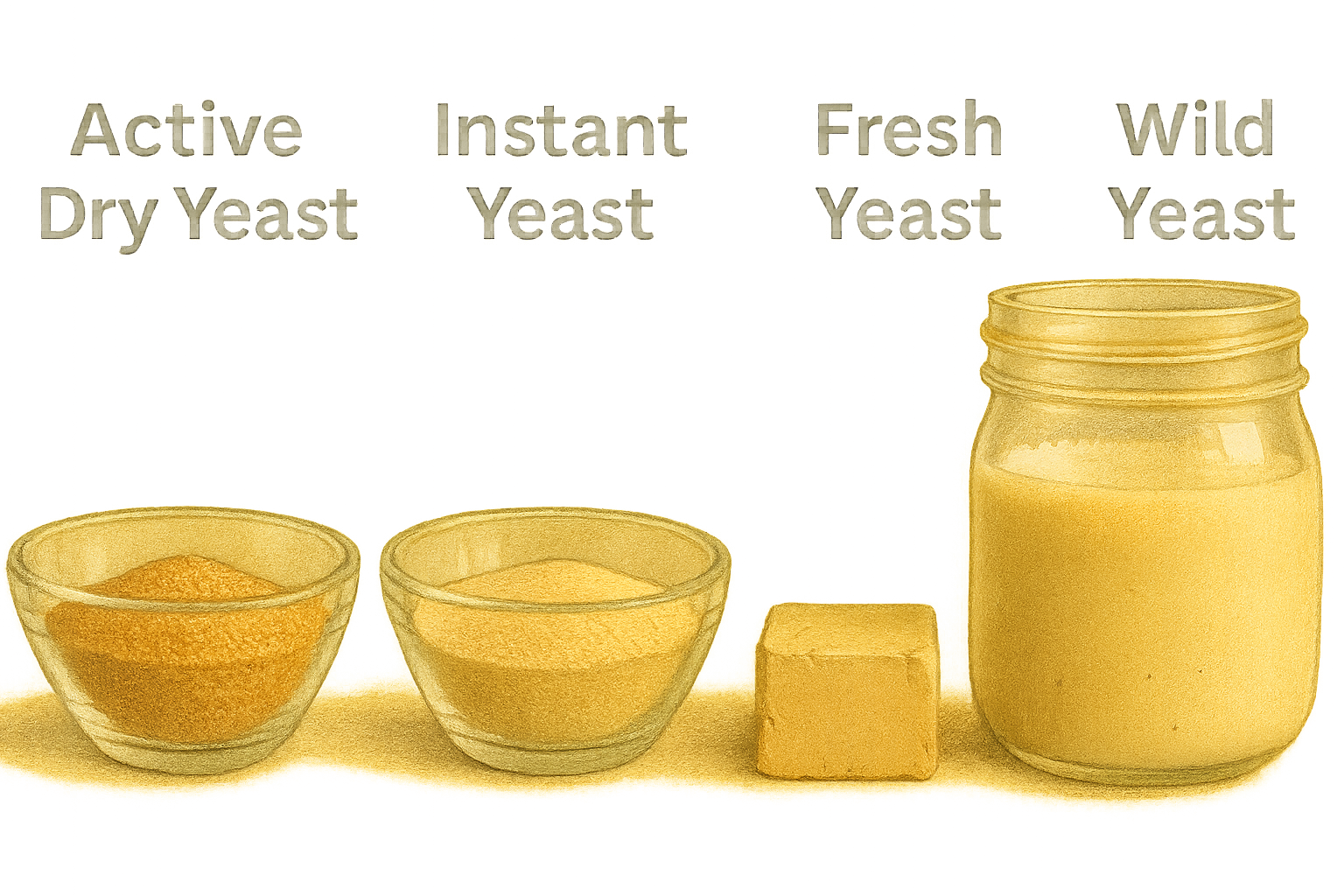
Commercial yeast production is a huge, efficient industry. Yeast is grown in large tanks where it is fed sugar and oxygen. Once it multiplies enough, it is separated, filtered, and processed into different forms. You’ll see yeast sold in three main forms for home baking:1. Active Dry Yeast
-
- The most common store-bought type
-
- Looks like small brown granules
-
- Needs to be dissolved in warm water to “wake up”
-
- Great for everyday bread, rolls, and pizza
2. Instant Yeast (a.k.a. Fast-acting or Easy-bake Yeast)
-
- Finer granules than active dry
-
- Doesn’t need dissolving—can be mixed straight into flour
-
- Rises faster, so good for busy bakers
3. Fresh Yeast (Cake Yeast)
-
- Soft, moist, and crumbly
-
- Used by many professional bakers
-
- Needs refrigeration and has a shorter shelf life
-
- Gives excellent flavour and predictable rising
Can Yeast Cause Infections?
This is a common worry, so let’s clear it up.
Yeast used in baking does NOT cause infections. The yeast in your kitchen—Saccharomyces cerevisiae—is safe to handle. It cannot infect your skin, lungs, or digestive system.
Yeast infections in humans are caused by a completely different organism, usually Candida, which is not found in baking yeast. They are unrelated.
When working with yeast:
-
- It’s safe to touch
-
- It won’t enter your body and cause problems
-
- The worst that can happen is dry hands from the flour
As long as you follow normal kitchen hygiene (washing hands, cleaning surfaces), you’re perfectly safe.
Final Thoughts
Yeast may be tiny, but it’s responsible for some of the greatest foods in the world. Understanding it in simple terms—it’s a living fungus that eats sugar and makes bubbles—helps you bake better and with more confidence. With so many convenient commercial forms available, using yeast has never been easier or safer. Enjoy the magic!