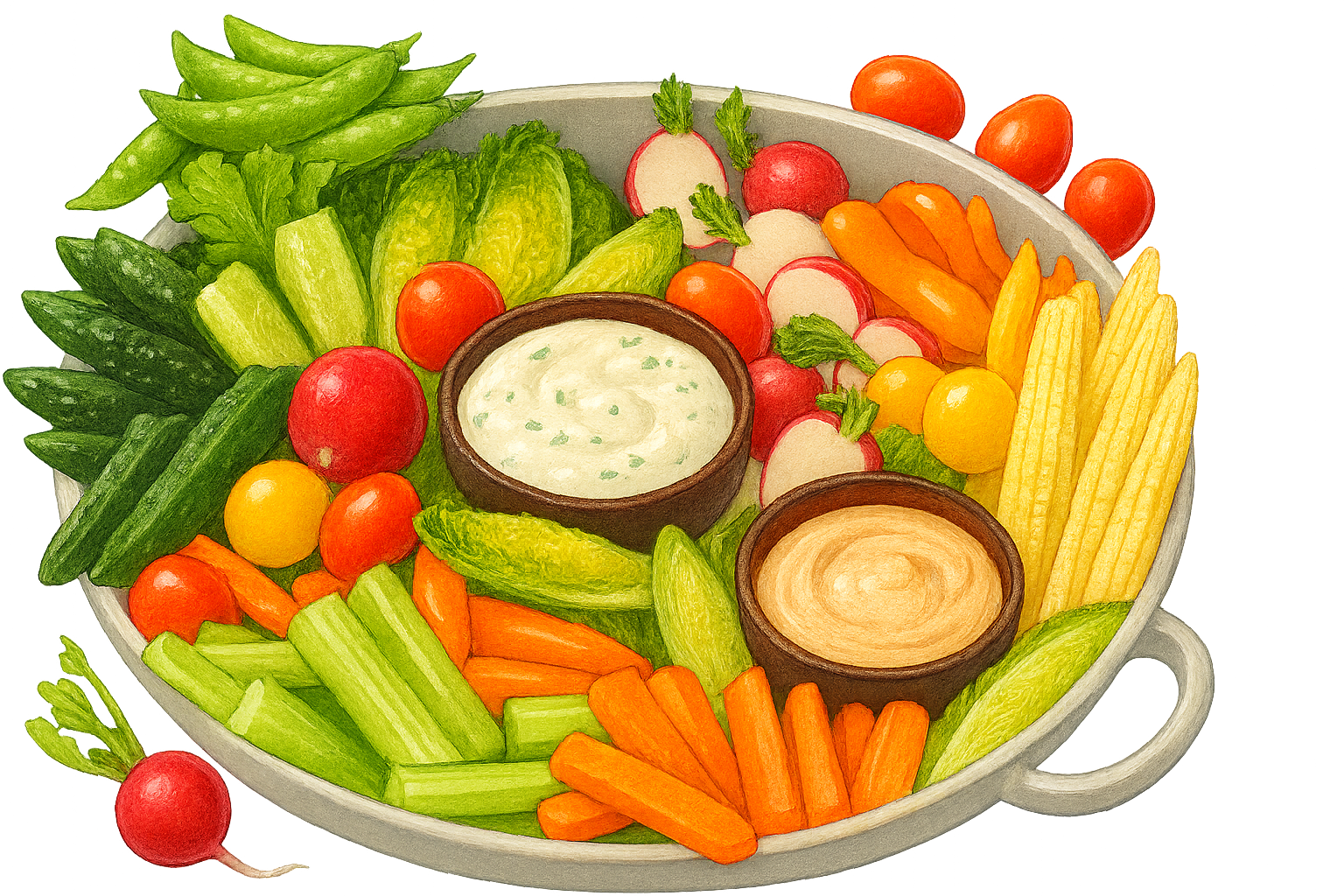
There’s something disarmingly elegant about a plate of crudités. At first glance it’s just raw vegetables on a plate, but look closely, and you realise it’s actually a quiet celebration of knife skills, colour, and restraint. Every slice, every baton, every shaved curl shows intention. The French have understood this for generations: the secret to crudités isn’t complexity — it’s precision.
Knife Work
While most people associate “knife skills” with preparing stews, roasts, or elaborate mains, crudités are the place where your technique is fully visible. A julienned carrot can’t hide behind a sauce. A cleanly shaved fennel bulb tells you more about your control of the blade than a chopped onion ever will. And that is why the crudités platter has long been a favourite among chefs — it lets vegetables speak for themselves, shaped thoughtfully and arranged with a gardener’s eye for order.
In France, the assiette de crudités is both art and appetite: mounds of grated carrots, neat discs of beetroot, fanned radishes, crisp lettuce, maybe a soft-boiled egg tucked in the centre. It’s a study in balance — colour against colour, shape against shape — each vegetable cut in a way that best suits its personality. Carrots julienned for crunch. Tomatoes sliced to show off their shine. Fennel shaved, meltingly thin. Potatoes cut into tidy rounds after steaming. Every slice is a choice.
Borderless Reach
But what’s lovely about crudités is how universal the idea is. Italians have pinzimonio, where raw vegetables are dipped simply into olive oil seasoned with salt and pepper. In Japan, crisp vegetables appear alongside miso dips in izakaya. In the Levant, raw radish, cucumber, and lettuce leaves sit next to mezze platters, cleansing the palate between bites. Even in India, think of the onion–cucumber–carrot plates served with tandoori dishes. The concept travels, adapting to local produce and local techniques.
Across cuisines, the thread that ties these dishes together is skill with a knife. How you cut determines how you taste. A thick carrot wedge eats differently from a fine julienne; a chunky cucumber slice feels rustic, while shaved ribbons feel delicate. Crudités, more than most starters, remind us that the shape of food affects its experience.
Below are two recipes — one traditional, one modern — both celebrating vegetables and the cuts that make them shine.
1. Classic French Winter Crudités Plate
Ingredients (Serves 2):
- 1 large carrot
- 1 cooked beet
- 2 small potatoes
- 1 egg
- 2 handfuls lamb’s lettuce or arugula
- ½ clove garlic, finely minced
- Fresh herbs: parsley, dill, chives
- Salt, pepper
- Mustard vinaigrette
Method:
- Julienne or grate the carrot.
- Dice or slice the beet; mix with the minced garlic.
- Slice the cooked potatoes into even rounds.
- Wash greens and spin dry.
- Soft-boil the egg (5 minutes from boil), cool, peel and halve.
- Arrange vegetables in neat mounds on a plate, egg in the centre.
- Season lightly, drizzle with vinaigrette, scatter herbs.
This version showcases basic cuts — julienne, rounds, dice — all simple but visually striking when kept separate on the plate.
2. Mediterranean Crudités with Lemon–Tahini Dip
Ingredients (Serves 3–4):
- 1 cucumber, cut into batons
- 1 red pepper, sliced into thin strips
- 1 fennel bulb, shaved thinly
- 1 carrot, cut into long matchsticks
- A handful of cherry tomatoes, halved
- Olives
- Dip: 2 tbsp tahini, 2 tbsp lemon juice, 1 tbsp olive oil, salt, pepper, splash of water
Method:
- Prepare the dip by whisking everything until creamy.
- Cut cucumbers into long batons for crunch.
- Slice peppers into thin strips to contrast textures.
- Use a knife or mandoline to shave fennel.
- Arrange everything in clusters and serve with the dip in the middle.
This plate celebrates variety: different shapes, different textures, all cut to bring out their best qualities.
Crudités remind us that vegetables don’t need disguising. With a little technique and a sharp knife, they can be striking, refreshing, and celebratory — a quiet showcase of skill on a plate.