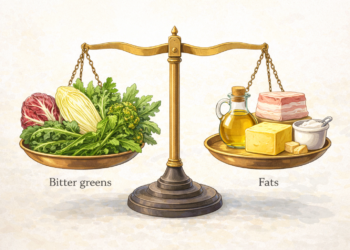
Why Bitterness Balances Fat
Bitterness is often misunderstood. Many cooks treat it as something to avoid, assuming it signals a mistake or an ingredient ...

Bitterness is often misunderstood. Many cooks treat it as something to avoid, assuming it signals a mistake or an ingredient ...
Starch is rarely celebrated in cooking. It has no aroma to announce itself, no color to catch the eye, and ...
Dried herbs often suffer from misunderstanding. Many cooks treat them as a second-best substitute for fresh herbs, something to sprinkle ...
Fresh herbs often feel like an afterthought—something scattered on top just before serving. In Italian cooking, however, this timing is ...
Deglazing often sounds like a technical maneuver—pour liquid into a hot pan, scrape, move on. In Italian kitchens, however, the ...
For many cooks, browning feels like the ultimate shortcut to flavor. We are taught early that color equals taste: darker ...
Anchovie fans and critics alike know that anchovies often divide opinion. Many people think of anchovies as aggressively fishy or ...
Roman cooking is famously direct. It does not rely on delicate layering, subtle sweetness, or decorative complexity. Instead, it values ...
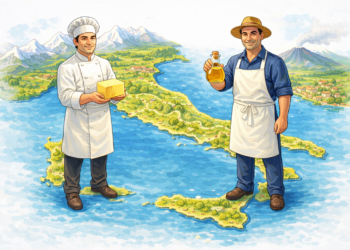
In Italian cooking, fat is never a neutral choice. The butter vs olive oil debate illustrates how whether a cook ...

Olive oil often enters the kitchen quietly. It gets poured into pans, drizzled over vegetables, or finished on pasta without ...